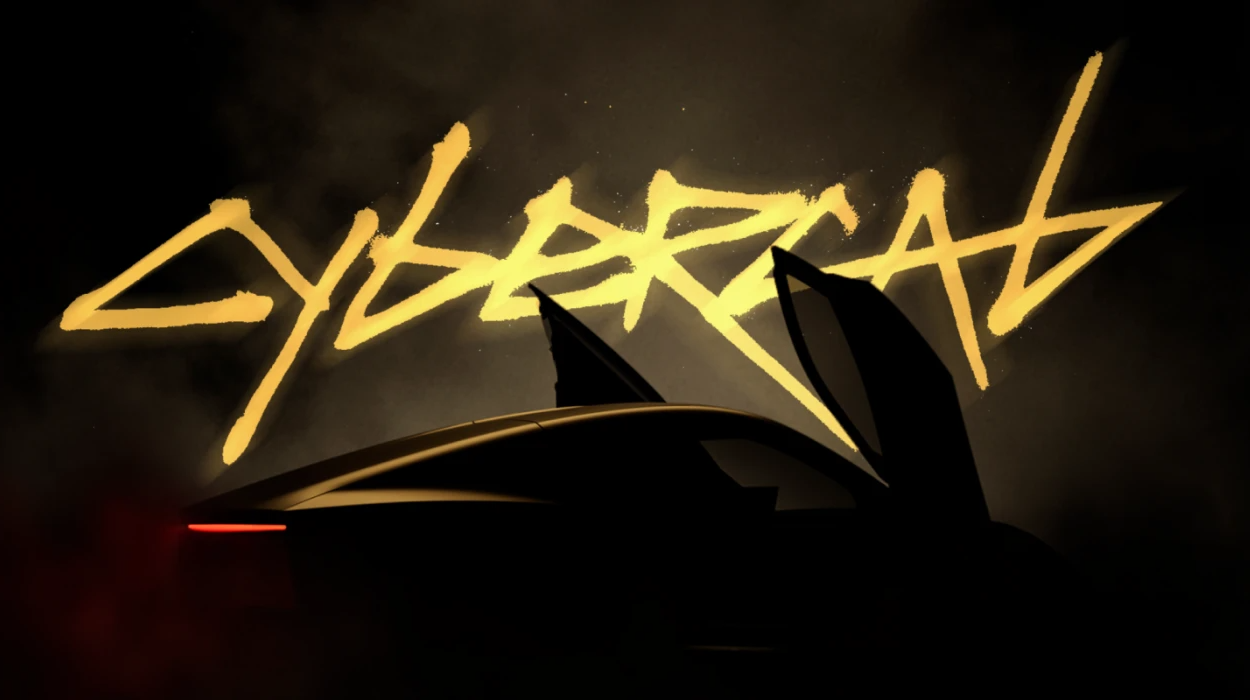
Tesla AI VP Ashok Elluswamy confirmed on X on September 14: once FSD v15 rolls out, Robotaxi will drop its operating-hour restrictions, and starting in October the entire fleet upgrade will enable 24-hour passenger service. The same system also runs on consumer HW4 vehicles, with the push window landing between late this year and early next year. Tesla plans to hand the night shift to a ten-billion-parameter network that runs itself.
FSD v15 Goes Live, Robotaxi Goes Overnight
Robotaxi currently runs in Austin, Dallas, Houston, the San Francisco Bay Area, and Miami, all with fixed operating hours and gaps where the service stops taking rides overnight. This commercial fleet, made up of modified Model Ys, operates across two states and six cities and has racked up over 380,000 miles of unsupervised driving. Tesla AI VP Ashok Elluswamy said it plainly: once the next-generation FSD architecture is officially live, those time gaps can be filled in.
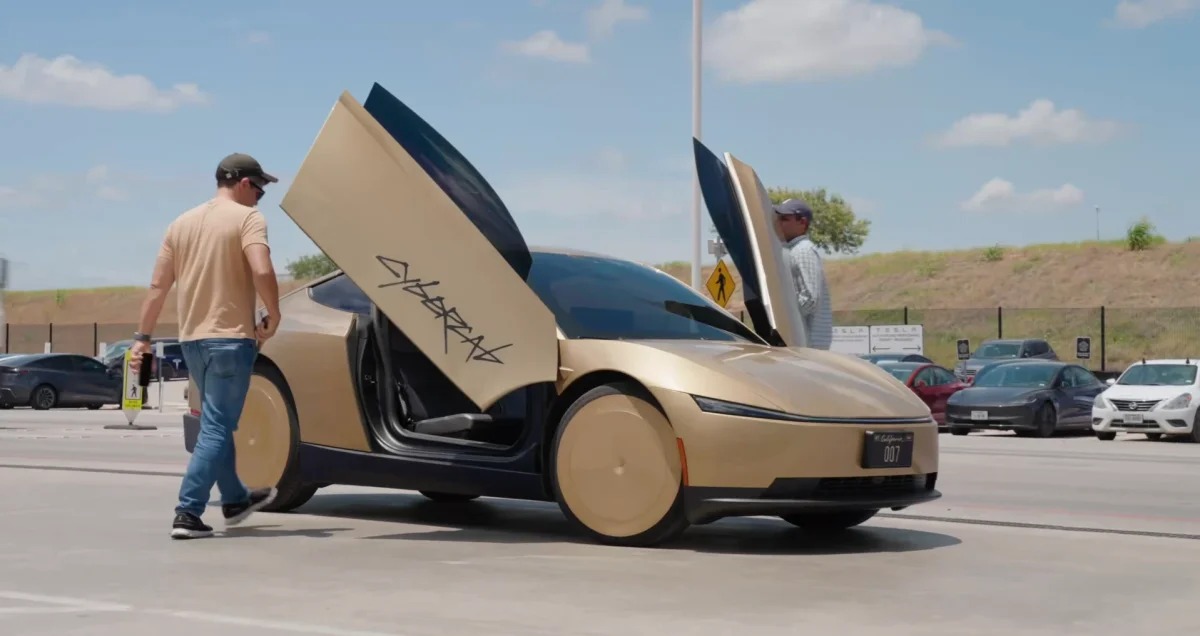
Filling those gaps falls to FSD v15. Elluswamy made it clear that the small-scale test will expand to a full fleet-wide push next month. The production Cybercab carries a more powerful FSD computer, while current Model Ys run on HW4/AI4 chips with enough compute (how many operations a chip can run per second, which determines how large an AI model it can handle) for the same system. Cybercab has officially joined the Austin fleet, neatly filling the vehicle-density gap.
FSD v15 is a generational leap: model parameters scale up to 10x the current version, putting it in the ten-billion-parameter range neural network(an AI model designed to mimic the structure of the human brain; more parameters generally mean it can handle more complex road conditions), with seven architectural changes over v14. Early versions have already delivered roughly 40% of the expected improvements, and internal test metrics are all on target. Elluswamy previewed that the core gains of the new system are earlier hazard prediction, shorter reaction times, and improved collision avoidance.
Cybercab Joins the Fleet, Filling the Vehicle-Density Gap
The reason you can't hail a ride at night isn't a lack of nerve for driving in the dark—it's a lack of cars. Cybercab landing in Austin plugs exactly that gap.
Tesla Robotaxi operates in Austin, Dallas, Houston, the San Francisco Bay Area, and Miami, with fixed passenger service hours. There was a trial of unsupervised overnight service this past spring, but operations still had gaps. Filling those gaps isn't a software problem—it's a car problem. You need two vehicle models online at the same time for scheduling to work out.
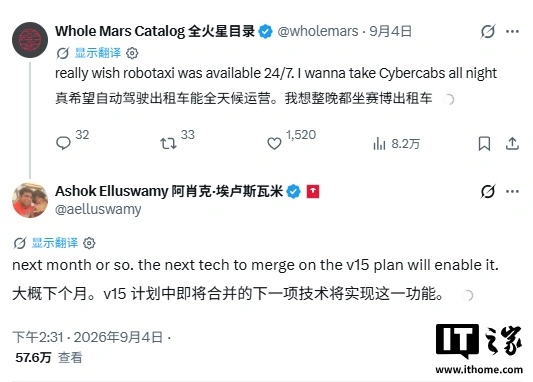
Cybercab is the first two-seat model designed from the ground up for autonomous driving, with no steering wheel. After joining the Austin fleet, it teams up with the modified Model Ys to push fleet density higher. Responding to @wholemars on X, Elluswamy dropped this line: the day the next-generation FSD architecture goes live, 24/7 passenger service is ready to go. The window is October.
That software is FSD v15. On the Q2 earnings call, management said some Robotaxis are already running an early version of v15; Elluswamy said at the same meeting that the early version has already absorbed about 40% of the expected improvements, internal test metrics are on target, the fleet has logged over 380,000 miles of unsupervised driving across two states and six cities, and the safety record is "impeccable." See the data card below for the figures—no need to repeat them here.
v15 runs on two types of vehicles: HW4(Tesla's fourth-generation in-car autonomous driving chip, also known as AI4) provides enough compute, and the FSD computer on the production Cybercab is even more powerful.
Under the hood, v15 is a big leap—possibly bigger than the jump from v13 to v14: parameter count(the total number of adjustable variables inside a neural network; a higher number generally means the model can handle more complex scenarios) scales to 10x the current version, pushing into the ten-billion-parameter range. New features Elluswamy previewed include earlier hazard prediction, shorter reaction times, and improved collision avoidance.
Fleet density is just the surface; the leverage point is v15. Tesla has said before that v15's rollout is a prerequisite for Robotaxi expanding into new cities. October isn't just "you can hail a ride at night now"—it's the starting gun for whether an autonomous ride-hailing network can push into the next major city.
The Robotaxi Fleet Is Running Your Car's Hardware
The Model Ys carrying paying Robotaxi passengers run the standard HW4(Tesla's fourth-generation in-car compute platform, commonly known as AI4) platform. Compared to the consumer version, only two things are added: a communication module called "Project Halo," and a rearview camera cleaning nozzle.
Cameras, compute board, sensor layout—basically the same as the Model Y you'd pick up at a showroom.
Elluswamy delivered the fleet numbers on the Q2 earnings call and put it bluntly: "The Robotaxi program is running very smoothly, particularly from a safety standpoint, achieving an impeccable safety record."
He also said it's running an early version of FSD v15, that 40% of the seven major improvements have already landed, and that all internal test metrics are on target. This is the last safety net before the full fleet switches over.
Once this validation chain holds, the rest follows logically: the modified Model Ys logged 380,000 miles across two states and six cities, proving the early v15 build runs and runs stably on HW4. After the full fleet upgrades to the complete v15 in October with all seven improvements live, whether the HW4 car in a consumer owner's driveway can run it is just a matter of time. Tesla's original timeline has consumer pushes starting late this year to early next year.
HW3(Tesla's third-generation in-car compute platform, commonly known as AI3) owners aren't as lucky. Tesla has made it clear that HW3 compute can't support true unsupervised autonomous driving, so it won't get v15. The v14 Lite currently being pushed out is likely the last major version they'll receive. This hardware generation gap is drawn more clearly than any software changelog.
HW4 Owners Get It by Year-End, HW3 Stuck on v14 Lite
Commercial fleets absorb real-road data first, then release to consumer models—this two-stage push pipeline decides who gets v15 first and who gets locked out.
In Musk's framing, FSD v15 being ready is the hard prerequisite for large-scale Robotaxi expansion. Tesla AI VP Elluswamy laid out the push order plainly: commercial vehicles go first, and after validation, the system gets released to consumer models.
Vehicles equipped with HW4(Tesla's fourth-generation autonomous driving hardware, fitted to production cars from 2023 onward) hardware are expected to receive the v15 push between late this year and early next year.
HW3(Tesla's third-generation autonomous driving hardware, fitted to early vehicles from 2019 onward) owners are hearing a different story.
Tesla has made it clear that HW3 compute can't support true unsupervised autonomous driving, so it won't be getting v15. The FSD v14 Lite currently being pushed is likely the last major version for these older vehicles, unless a hardware upgrade plan is offered down the line.
Before v15 Hits the Road, Owners Can Only Watch and Wait
The Robotaxi fleet gets v15 in October, and consumer HW4 pushes land late this year to early next year. In the gap between, there's nothing to do but watch a few key milestones.
Watch October: if the Robotaxi fleet flips to v15 fleet-wide on schedule, the rest of the projections have a foundation. If it slips, the year-end window slides back with it.
Watch Cybercab: if it joins the Austin fleet and actually fills the overnight gap, 24/7 coverage is real. If the overnight hours stay empty, that selling point is still on paper.
Then watch the consumer HW4 push window. Late this year to early next year is a watershed—whether it lands inside the window or slips out directly decides whether regular owners should get their hopes up this round. That information only comes from official announcements and owner community reports; it can't be guessed.
Finally, understand one key difference: the fleet version and the consumer version aren't the same. The Robotaxi fleet runs modified Model Ys with a rearview camera washer and a communication module called "Project Halo" added; the rest of the hardware matches consumer HW4 models. In other words, running v15 on consumer cars won't run into a "compute falls short" problem—the only blockers are software adaptation and regulatory processes.
As for v15's model parameter count being 10x the current version, that's a figure from the company's earnings call—with no third-party retest, treat it as a first-party claim. The decision to switch cars should follow "when the push arrives," not "the parameters got bigger."
Check your car's hardware code: HW3 isn't on the v15 push list, and the highest version you'll likely receive is v14 Lite.
Set a reminder for October to see whether the Robotaxi fleet switches to the full v15 build on schedule.
After Cybercab enters service in Austin, watch whether overnight gaps are actually filled and 24/7 coverage holds up.
Track the v15 push window in HW4 owner communities or groups—late this year to early next year is a watershed.
Once the push lands, check owner community feedback and compare the real-world feel against v14; don't speculate about the upgrade experience before then.
Source: ITHome (2026/9/14), based on public statements by Tesla AI VP Ashok Elluswamy on X and on the Q2 earnings call, cross-referenced with same-period coverage from Phoenix Auto and Tencent News.