Two German regional courts have issued rulings against Google in quick succession: In May, the Munich I Regional Court became the first to classify AI search summaries as "Google's own statements" rather than references to third-party content. On September 24, the Aachen Regional Court followed the same line of reasoning, barring Google from further disseminating three false statements about a neuroradiologist, with a maximum fine of €250,000 per violation. Google had previously sidestepped appellate review of the Munich ruling through a settlement, allowing that legal reasoning to keep taking effect in another case.
Settlement didn't bury it — a second court ruled the same way
The appeal never happened, but the reasoning survived — and four months later, another court applied the same logic.
The next court came quickly. In the case taken up by the Aachen Regional Court, the plaintiff is a local neuroradiologist who served as chief physician and professor of neuroradiology from 2010 until stepping down at the end of June 2026.
On August 28, a colleague alerted him: Google AI Mode, when explaining his departure, pulled in alleged sexual assault accusations against his secretary. When users then searched for terms like "suspension," "dismissal," or "court proceedings," AI Mode returned multiple paragraphs of fully detailed fabrications, even writing up the supposed legal aftermath for him. None of it had anything to do with him — the AI had transplanted an entire criminal case involving a different professor onto his name, and the Aachen court confirmed by checking its own case files that the criminal proceedings named someone else.
He documented the confusion thoroughly by the end of August and emailed Google requesting removal. Google replied in mid-September: no action. A formal legal letter sent the same day didn't move things either; Google only confirmed receipt, and according to the court's finding, the false text was still online at the time.
The Aachen court accordingly barred Google from continuing to disseminate the three contested passages. The false statements could severely damage the doctor's professional reputation, so the court proceeded under expedited procedure without first hearing Google. The injunction is not yet final — Google can file an objection — but each violation carries a maximum fine of €250,000.
Background: in late May 2026, the Munich I Regional Court drew the line first — Google must bear direct responsibility for content assembled in its AI search summaries AI search overview(a feature where Google generates answers directly at the top of search results), treated as Google's own statement rather than a normal search result. Google announced an appeal, but the case ended in settlement; no one disclosed whether money changed hands, and both the publishers involved and Google declined to comment.
Who owns the words an AI stitches together?
The Aachen court gave Google the same identity: what an AI outputs isn't something someone else wrote — it's something Google itself wrote.
The court's phrase was "an independent, novel, substantive statement assembled from evaluated combinations of multiple third-party websites." Plain terms: Google isn't passing along a page, it's writing a new one. And the author of a new page answers for it.
That's a different thing from listing a link. When AI Mode (a conversational mode in Google Search that uses AI to generate full-paragraph answers directly, rather than just listing blue links) produces a fresh piece of text, the law no longer sees a search engine pointing at other people's web pages.
The ruling also said Google could have checked itself: comparing AI output against the source pages it crawled would surface the errors. Had the AI been fed the doctor's objection, the system should have caught on its own that the "alleged sexual assault" was a case of mistaken identity. It had the means to avoid the harm and didn't use them.
So the "I'm a neutral technology intermediary" defense no longer holds in court. The content is Google's own, and when things go wrong, Google pays. The injunction mentioned above was issued precisely under this new identity.
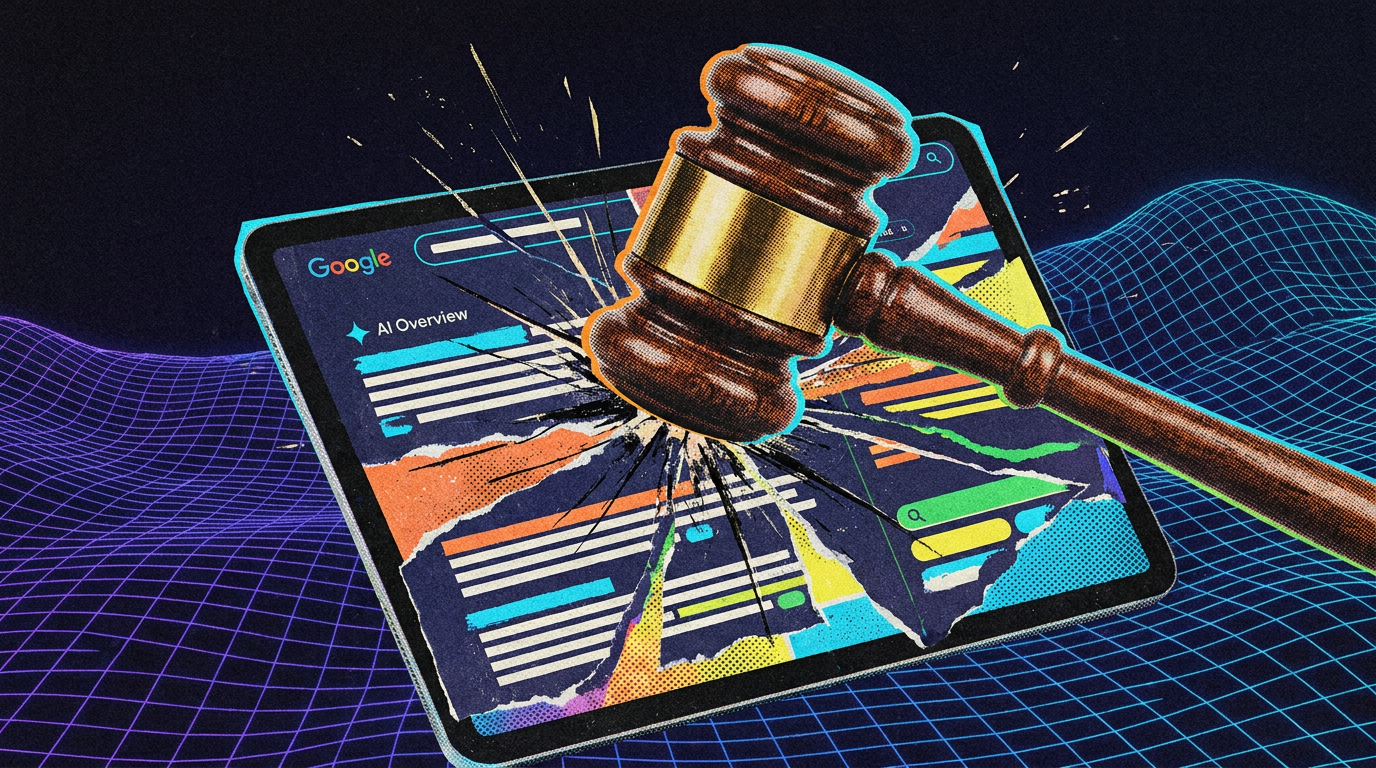
Google buys time with money; courts build consensus through citation
Without a final judgment, Germany still has no binding higher-court rule on what AI search should be liable for in what it says. The Munich ruling could have been the first cornerstone, but Google buried it with a settlement. Lower courts, however, keep copying its reasoning, brick by brick.
Google publicly announced an appeal of the Munich ruling, but the case never reached a higher-court decision. Neither Google nor the publishers disclosed any settlement amount, and the Munich court declined to comment on the broader significance of its own ruling. The individual case was sealed off, but the reasoning didn't die.
The Aachen court didn't wait for a final ruling and simply transplanted the Munich reasoning — that AI output is "an independent, novel, substantive statement assembled from the evaluation and combination of third-party website content." Two rulings using the same sentence: German courts, by cross-citing each other's reasoning, are forming a kind of tacit consensus.
Another group has spotted this opening: law firms specializing in AI defamation cases. AI search answers are stitched together by models from multiple sources; users can ask endless follow-up questions, freely assign personas, and producing a readable, plausible, detailed false statement takes almost no effort.
The Munich case involved two publishers tagged with "fraud"; the Aachen case involves a neuroradiologist saddled with "sexually assaulting his secretary" — events that originally happened to someone else. The Aachen court could debunk it on the spot because its own criminal files showed the doctor wasn't the person named: a ready-made point of comparison left "AI confidently talking nonsense" with nowhere to hide. Swap in an ordinary person with no record to check, and AI can just as easily assemble a multi-paragraph fabrication — and the injunction can still be granted.
Once the workflow is proven, what remains is mass replication: craft a query → trigger AI fabrication → screenshot for evidence → apply for injunction → pre-trial settlement. Google faces a potential €250,000 injunction penalty per case, plus possible additional sanctions under German law if "continued dissemination" is deemed intentional.
How low the settlement can go depends on how many reusable injunction templates the opposing lawyer has on hand. The fact that AI search is too easy to manipulate is already public knowledge. Once "being wrongly tagged by AI" becomes a manufacturable event, legal services shift from passive defense to active hunting.
The Aachen ruling cites Munich directly, and other courts may cite the same reasoning. If they do, "AI output is Google's own statement" stops being one judge's personal opinion and starts looking like a standard of adjudication taking shape. Google wanted to use settlement to silence the issue; what it sealed off is just one ruling, not a case law still forming.
Will publishers start charging Google back?
The immediate win-loss is about a few false statements. The bigger shift: once AI answers count as Google's own original content, the publishers whose text was scraped can assert rights in the other direction — my text was taken, rewritten, combined into a new statement by you, so why shouldn't I get a share?
Google used settlement to keep the Munich ruling at the first-instance level and to hold the Aachen injunction short of a final judgment. Neither court backed away from the classification that "AI summaries are Google's own statements." Google can no longer hide behind "I'm just a neutral channel."
Follow that through and AI search's economics break. Traditional search runs on traffic referral: Google sends users to original pages and sustains the ecosystem through ad revenue sharing and traffic distribution. AI search delivers answers on the results page, keeps users there, and turns original webpages into raw material.
What happens when the raw-material side also charges? AI answers would need to pay for every piece of content behind every answer. Google would bear liability for erroneous statements and pay for the sources of correct ones at the same time.
Germany isn't an isolated case. The "AI summary is the platform's own statement" path carved out by German courts will be picked up as precedent material by lawyers in other jurisdictions.
Watch two things to judge whether this line really holds. Will Google appeal the Aachen injunction all the way to the Federal Court of Justice — only a final ruling there produces a hard rule across Germany and the EU; continued settlement means buying time with money. Will publishers file reverse suits in German or other EU courts — once someone cites the Munich and Aachen classifications in a lawsuit, the storyline shifts from "who's liable for falsehoods" to "who pays for answers."
One email from a colleague pulled him into a lawsuit with Google
The doctor in the Aachen case wasn't a legal pioneer — he just searched his own name. What ordinary people can do isn't sue, but see clearly what the AI is saying on their behalf.
On August 28, 2026, a colleague told him that Google AI Mode, while explaining why he was leaving his post, mentioned sexual assault allegations against his secretary. The allegations pointed to a different former university professor and had nothing to do with him.
He didn't plan to become a test case. He just wanted those words gone.
Here's a playbook anyone can follow: search yourself, see what the AI says, and if you find a case of mistaken identity, preserve the evidence. Type your own name into the Google search box along with trigger words like "suspension," "dismissal," or "allegations," and check whether AI Mode stitches together details that don't match reality — this is the most direct way to verify right now.
Screenshots should capture the question, the answer, the URL, and the timestamp at the same time; a single screenshot can later be argued away as "modified." If you find a discrepancy, submit it through the feedback entry on the search results page, and keep the submission record and receipt. Then watch one thing: will Google appeal?
Use an incognito window to search your own name, profession, and city as a three-keyword combination, and compare AI Mode's answer item by item against your real résumé.
Re-search by adding trigger words like "suspension," "dismissal," "lawsuit," or "investigation," and record any language that ties you to a specific case.
If you spot a likely case of mistaken identity, take a full-screen screenshot (including URL, timestamp, question, and full answer), and save a second copy with a web archiving tool.
Submit a removal request through the "Feedback" entry on the Google search results page, and keep the submission record and Google's automatic receipt email.
If nothing is removed within a week, or the case involves serious defamation, consult a local lawyer about an interim injunction; German courts have shown a willingness to accept such applications.
For readers in China who can't file a German lawsuit anytime soon, the signal to watch is whether a third German court copies the Aachen logic — and whether any case finally reaches the federal level, where the rule that "AI summaries are Google's own statements" would stop spreading on lower-court precedent alone.
Source: The Decoder: AI News (RSS). Caliber note: This article synthesizes two German judicial developments — the Munich I Regional Court's May ruling (settled out of court, never reviewed by a higher court) and the Aachen Regional Court's September 24 ruling (appealable, not yet final). Factual details follow the Aachen court's judgment and The Decoder's reporting; Google has not publicly commented on the injunction.