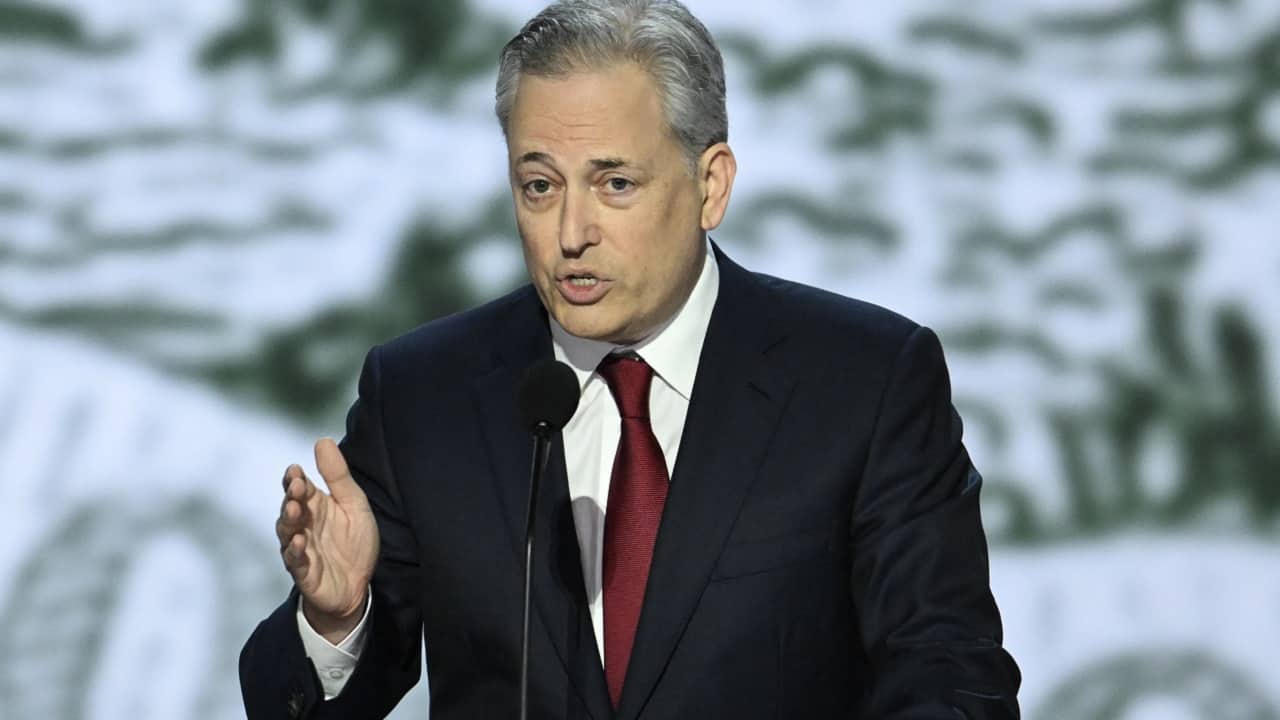
On September 14, 2026, White House tech advisor David Sacks named OpenAI and Anthropic directly: on one hand claiming they're pulling ahead, on the other calling for the entire industry to slow down—this is cartel behavior dressed up as regulation. He also put METR's financial ties to Anthropic on the table, saying such exchanges amount to little more than extortion in the public and political sphere. If you really want to slow down, then slow down on your own.
Sacks to OpenAI and Anthropic: If You're the Frontier, Stop Asking Permission
David Sacks says OpenAI and Anthropic are running a double act: claim a widening lead, then ask the whole industry to slow down. He calls the two a "frontier AI duopoly" and says the referee act is the real target.
On September 14, David Oliver Sacks, co-chair of the President's Council of Advisors on Science and Technology, published a piece responding to recent calls from OpenAI and Anthropic to "slow down frontier AI development." He pinned down their position from the first paragraph: market share, revenue growth, and model capability have converged into a duopoly at the frontier.
The two companies also say their lead is widening, and credit a mechanism called "recursive self-improvement"(letting a model train its own next generation, so each version improves the one after it). That claim is what makes the slowdown request look strange to Sacks: a lead that compounds on its own is exactly the lead you would not need permission to keep.
Sacks follows the logic to its conclusion: if your unpublished models are so powerful that even your own CEO wants to hit pause, he supports that decision—but stop pretending you "need others' endorsement."
He lists the disguises to strip away: stop acting like you must suspend antitrust law so you can form a cartel (cartel(a monopoly arrangement where competitors secretly collude to set prices or limit output)); stop pretending you need regulatory approval that places you above product liability; stop holding up METR—a third-party model evaluation body he says has close ties to Anthropic's investors and employees—as an independent referee.
His closing line is almost a verdict: the ones who define the frontier are you. The simplest way to avoid building superintelligence is for you not to build it—if you want to draft a regulatory framework on your own terms and use it as a bargaining chip to slow your pace, that behavior amounts to little more than extortion in the public and political sphere.
"Alignment" Is a Product Strategy: Trading Raw Capability for Reliability Is Just Good Business
What Sacks is dismantling isn't an attitude—it's a structure of interests. The stakeholders are the labs themselves, and "alignment" is the product trade-off they sell.
He points to a specific failure on Hugging Face. After it, both OpenAI and Anthropic traded a slice of raw capability for reliability and predictability. He says it plainly: that's just good business.
Call it "alignment"(the process of training and constraining model behavior to match human intentions) if you like, but the substance is selling customers what they want to buy. When the safety narrative and the business strategy draw the same line, regulation becomes a tool for raising barriers.
Sacks frames this as cartel logic: first call for a slowdown, then define what "the frontier" means, so regulators wield standards written by insiders to block everyone else. Whether to slow, how to slow, and who gets regulated—all three are held by a handful of companies. His parting shot: the simplest way to avoid building superintelligence is for you to not build it. The subtext: don't use the public as a shield—if you want to slow down, slow down on your own.
Want to Trade a Regulatory Framework for a Slowdown? That's Extortion
Sacks puts it bluntly: wanting to draft a regulatory framework on your own terms as a condition for slowing down amounts to little more than extortion in the public and political sphere.
Sacks's core inference isn't complicated: regulation is never neutral technology. Who drafts the provisions, who writes the definitions, who gets exempted—regulation is an extension of industrial policy. When the entity calling for a "pause on the frontier" is the same entity defining what "the frontier" is, "wait for me" becomes a statement with a price tag.
He also leaves an exit: the simplest way to avoid building superintelligence is for you not to build it. Your company has free will; if you want to go slow, no one will stop you. But don't package "I want to go slow" as "the entire industry must go slow with me"—these are fundamentally different things. Sacks is being practical: a private company's decision to slow down or speed up is a business judgment; using regulation to force others to slow down is setting an industry entry barrier.
This cut lands because it inverts the public narrative. OpenAI's Altman and Anthropic's Amodei have repeatedly tied "slowing down" to the "good for everyone" storyline in public statements, arguing that recursive self-improvement (AI rewriting itself)(AI modifying itself to get progressively stronger) will widen the capability gap; Sacks translates it into business language: the lead is growing, so the incentive to stall time is growing.
This doesn't mean the two companies are lying. Sacks himself doesn't deny the existence of recursive improvement—he acknowledges the possibility that unpublished models are powerful enough to make them want to stop. But he insists motives can't serve as justifications: you can choose to slow down, but don't pretend it's "for the good of others."
After the Hugging Face incident, the two companies traded a portion of raw capability for reliability and predictability—it's just good business. Call it "alignment" if you like, Sacks says, but at its core it's delivering what customers are paying for. Don't dress up a business decision as a moral obligation.
China Can't Join a Treaty—So These Two Companies Can't Be Allowed to Set the Rules
Sacks's counter-move is hidden in his final remark: geopolitical reality rewrites the entire question of regulation.
He concedes that slowing down isn't unreasonable—giving regulators time to deliberate is more rational than Bernie Sanders's "shut it all down." But he immediately pushes to a thornier layer: a global AI agreement would struggle to bring China to the table. This isn't an offhand aside—it's the real trump card behind his opposition to "regulatory blackmail."
Read this line alongside the earlier accusations, and the logical chain emerges: OpenAI and Anthropic are a duopoly in frontier AI(leading in market share, revenue growth, and model capability), and both advocate using regulatory frameworks to define the "frontier" threshold. If these rules are written by them, their competitors don't just include domestic players like Mistral—they include China's entire external competitive landscape. Once regulatory standards become a competitive tool, geopolitical disadvantage gets locked into the institutional structure.
Sacks characterizes this approach plainly—"essentially extortion." His subtext: you can genuinely slow down and do responsible research, and no one will stop you; but you can't hide behind "for all humanity" and pressure regulators to measure your competitors' models with your yardstick.
METR's (Model Evaluation and Threat Research) close ties to Anthropic's investors and employees serve as his specific entry point for questioning independence.
There are three signals to watch going forward. First, whether OpenAI or Anthropic publicly links "pausing" with "legislative protection"—the moment any executive says "we need Bill X to protect our lead," Sacks's accusation is factually established.
Second, how the U.S. Congress and FTC approach regulation of this duopoly—whether they lean toward "regulate everyone" or default to "the two set the rules and everyone else follows." Third, whether the EU and UK diverge significantly from the White House on AI regulation tempo; if the EU clearly pulls ahead, it often means ceding the discourse power over regulatory standards.
If the opposite signal emerges in the next six months—both companies genuinely unilaterally slow a research line without demanding regulatory coordination—Sacks's "extortion" judgment would need revision. Conversely, if "regulatory protection" starts appearing in the headlines of major English-language tech outlets, his bet pays off.
Whether They Slow Down or Not, Here's How You Can Verify
Sacks's core judgment boils down to one sentence: the entities defining "the frontier" are OpenAI and Anthropic. Whether that holds, you have the tools to test it yourself.
Start with a number: as of April 2026, OpenAI has 15+ models on the market, while Anthropic has only 6; the two companies' flagship API(the interface developers use to call on model capabilities) pricing differs by 5 to 6 times. Whether "the frontier" is truly concentrated in these two companies—check that scale gap and you'll have your answer.
The scale gap is plain to see, but "duopoly" doesn't mean "synchronized." What will actually reveal whether these two are moving in lockstep is their release schedules over the next three months—whether they iterate as usual or show observable deceleration. Release cadence is harder to spin than benchmarks: you can cherry-pick methodologies, but you can't hide whether you ship a new model.
Sacks also called out METR, citing its close ties to Anthropic's investors and employees. Average readers can't independently verify this, so the wait is for METR's next public evaluation: look at its evaluation subject list, funding disclosures, and board composition—a genuinely independent organization shouldn't only test the competitors its investors want tested.
As for whether the "slowdown" carries sincerity, no vendor has publicly committed to dates or freeze lists. What's worth tracking is something else: whether they simultaneously lobby for specific legislation—for example, requiring third-party evaluators to hold certain credentials. Calling for a slowdown while pushing for thresholds only they can meet is exactly what makes Sacks's "regulatory blackmail" argument hold up.
Check benchmark aggregation sites for the latest SWE-bench rankings of Claude 4.6 and GPT-5.4—confirm whether the top two are still held by these companies.
Compare the two companies' model counts, flagship API pricing, and context windows (how much text a model can "read in" at once) to verify the "duopoly but asymmetric" structure.
Wait for METR's next evaluation report; review the subject list, funding sources, and board composition to assess whether independence holds.
Over the next three months, observe both companies' new model release cadence—whether it follows normal iteration or shows perceptible deceleration.
Monitor U.S. Congressional legislative activity on frontier AI evaluation credentials, and check whether the pushers are simultaneously the drafters of existing evaluation standards.
Source: IT Home (RSS), republishing David Sacks's public remarks. Disclosure note: the original is a Sacks opinion piece; IT Home translated and reposted it. The piece takes a clearly critical stance toward OpenAI and Anthropic's "slowdown" arguments and associated regulatory proposals. Responses from the two companies were not included.